Three or four lands, early green, access to black and red, and a castable creature or ramp spell. Exploration needs spare lands; a two-power body unlocks the first draw ability.
Develop
Use Exploration for extra land plays on your turn, establish land replay and station at sorcery speed. Greensleeves turns landfall into Badgers and stations for your land count.
Finish
Choose landfall combat, a charged drain, the Ashaya/Cub/Orb loop or a Nantuko loop. Resolve self-earthbend before sacrificing Cub; count library cards if Korvold is out.
Watch out
Graveyard exile, artifact removal and mandatory draws can end the engine. Seedborn untaps you on other turns but does not permit land plays then.
Hearthhull turns lands into cards first and life loss later.
Full gameplan
Station a creature to reach two charge counters, then pay one, tap and sacrifice a land to draw two and gain an extra land play. At eight counters, every land sacrifice makes each opponent lose two life. Crucible of Worlds, Icetill Explorer and Szarel, Genesis Shepherd replay the fuel; landfall creatures turn the returns into mana, tokens and damage. The Unicomplex turns an untapped return into creature recovery through Hearthhull's draw. The main combo routes to disclose include: Ashaya, Badgermole Cub and Zuran Orb, with Cub earthbending itself for repeated sacrifice and return; Lumra with bestowed Springheart Nantuko, Lotus Cobra and Zuran Orb; the same Nantuko on Titania, with Orb and either Cobra or Tireless Provisioner; Nantuko on Badgermole Cub, with Orb and Horizon Explorer; and a separate Voltaic Construct line bounded by mandatory draws. Preserve enough lands to recover if the table answers one of them.
Hearthhull, the Worldseed strategy guide
What it does
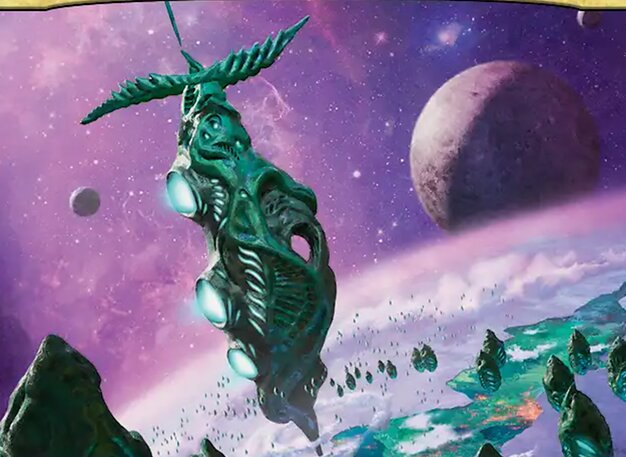
Hearthhull, the Worldseed costs {1}{B}{R}{G}. It starts as a legendary artifact, Spacecraft, with no creature type. Charge counters stay on it and are not spent when you use an unlocked ability.
Station: tap another untapped creature you control to add charge counters equal to its power. Only in your main phase with an empty stack. A newly cast creature can station because the ability belongs to Hearthhull, not that creature.
Two counters: {1}, tap, sacrifice a land: draw two and gain one additional land play that turn. The land-play permission arrives when the ability resolves.
Eight counters: it is a 6/7 artifact creature with flying, vigilance and haste. Whenever you sacrifice a land, each opponent loses 2 life. This drain is unavailable below eight.
Badgermole Cub, Lotus Cobra or Icetill Explorer contributes two counters immediately. Cub also earthbends a land into a hasty 1/1: it can station for one or tap for mana, but doing one leaves it tapped for the other. Ashaya, Soul of the Wild contributes power equal to your lands, counting itself and your other nontoken creatures while its Forest effect applies. It can station immediately, but its new tap-for-green ability still obeys summoning sickness. Greensleeves, Maro-Sorcerer also stations for your land count and can do so immediately; each 3/3 Badger it makes can add three more counters in a later station activation. Sazh’s Chocobo enters as a 0/1 and stations for nothing at first, but every land you control entering gives it a +1/+1 counter, so a single fetch land turns it into a two-counter body. Evolution Sage grows charge counters with landfall, but cannot proliferate a counter that is not there. Doubling Season doubles the counters station puts on Hearthhull.
How it wins
The everyday plan is to turn fetches and recycled lands into a board, then cash the lands in when the commander is charged. The repeatable engines add a higher ceiling. Ashaya, Cub and Orb need only three engine pieces, so disclose that smaller setup before shuffling. None comes from the Game Changer count alone.
Wincon 1·Landfall builds the board
Scapeshift, Splendid Reclamation, Aftermath Analyst and Lumra, Bellow of the Woods produce bursts of land entries. Put Tannuk, Memorial Ensign, Omnath, Locus of Rage, Greensleeves, Maro-Sorcerer, Springheart Nantuko or Field of the Dead down first. Otherwise the burst is mostly mana development.
With seven different land names, Field makes a Zombie for each land that enters while that condition is met. Basic copies share a name. Fetching seven Forests will not turn it on. Greensleeves makes 3/3 Badgers and Omnath makes 5/5 Elementals; Titania, Protector of Argoth makes a 5/3 for each land that leaves your battlefield for the graveyard.
Those tokens normally need another turn to attack. They can station immediately, and Omnath turns dying Elementals, including Titania tokens, Lumra and Greensleeves itself, into 3 damage each. The Badgers are not Elementals and give Omnath no death trigger. Doubling Season doubles the tokens, not the landfall triggers.
Wincon 2·Charge, then spend the lands
At eight charge counters, Scapeshift sacrificing N lands produces 2N life loss for every opponent. Bloodletter of Aclazotz makes that 4N during your turn, so ten lands can remove opponents at 40. Scapeshift finishes resolving, including the searched lands entering, before the sacrifice and landfall triggers go on the stack. Put the drain triggers above your landfall triggers if you want the life loss to resolve first.
Zuran Orb lets you sacrifice lands freely for 2 life apiece, so a charged Hearthhull can finish opponents already within range without another spell. Petrified Field is a smaller outlet: it sacrifices itself for a drain trigger and returns another land card from your graveyard to your hand. Mayhem Devil adds damage from those lands and your other sacrifices. Keep a recovery spell and enough mana if the current sacrifices are not lethal.
Five lands sacrificed with charged Hearthhull: 10 life lost by each opponent.
The same five with Bloodletter on your turn: 20 each.
Six returning lands with Tannuk: 6 damage to each opponent, causing 12 life loss each with Bloodletter on your turn. Bloodletter changes life loss, not the damage dealt.
Doubling Season changes token and counter output. It does not double Hearthhull’s drain or Cobra’s mana.
Wincon 3·Lumra, Nantuko, Cobra and Orb
This is one of three repeatable Nantuko combos; Wincon 4 uses Titania and Wincon 5 uses Badgermole Cub. It does not require Hearthhull to generate landfall and sacrifices.
Start: control Lumra enchanted by a bestowed Springheart Nantuko, Lotus Cobra, Zuran Orb and at least two lands. Have a Nantuko landfall trigger waiting and {1}{G} to pay for it. Bestow grants Lumra +1/+1, keeping the original alive as a 1/1 even if you temporarily have no lands.
Pay {1}{G} to make a Lumra token. Keep the enchanted original through the legend rule. The token dies, but its entry ability still goes on the stack.
Before that entry ability resolves, sacrifice two lands to Orb. Gain 4 life and trigger your sacrifice payoffs.
Resolve the token’s ability: mill four, then return all your graveyard lands tapped. The two lands supply two Cobra triggers and two Nantuko triggers.
Resolve Cobra’s triggers first for two mana, including green. Decline one Nantuko payment to make a 1/1 Insect, then pay {1}{G} on the other to copy Lumra again.
Repeat, keeping the original and sacrificing the same two lands before each token entry resolves. Name a finite number of repetitions and the finish.
The core makes repeatable life, landfall, sacrifices and Insects. Charged Hearthhull drains 4 from each opponent per pair of lands. Tannuk deals 2 to each from the returning pair. Mayhem Devil sees the two land sacrifices; Omnath sees each Lumra token die. Additional returned lands can increase the output.
The library matters differently here. Milling an empty library does not lose the game, so Lumra’s mill does not cap the core loop. Korvold or The Gitrog Monster adds mandatory draws that can cap it. Tannuk’s draw happens only on its second landfall resolution that turn; resolve it while cards remain. If the table interrupts after you mill the library, the next attempted draw is dangerous.
Provisioner can replace Cobra here too. Choose a Treasure for each of the two returned lands and spend those Treasures on Nantuko’s next {1}{G} payment. The repeat still funds itself without untapping the returned lands. Sacrificing two Treasures adds two Mayhem Devil triggers and two Korvold draws per cycle, on top of the land sacrifices. Doubling Season doubles the Treasures and increases the surplus.
Removal of the bestowed Nantuko, the mana engine or Orb breaks the repeat. Graveyard exile before Lumra returns the lands removes the fuel. Pass priority at the real response points; token deaths do not make the entry abilities unanswerable.
Wincon 4·Titania, Nantuko, Orb and Cobra
The same engine runs on Titania, Protector of Argoth. Titania’s entry ability does not return the land tapped, so one reusable land is enough when it enters untapped on its own.
Start: control Titania enchanted by a bestowed Springheart Nantuko, Zuran Orb, and Lotus Cobra or Tireless Provisioner. You also need a land that enters untapped and taps for mana, and a way for it to enter, such as your land drop. A basic is the safe choice. The fetch lands, Cabaretti Courtyard, Maestros Theater and Riveteers Overlook make no mana, Bojuka Bog and Field of the Dead enter tapped, and a shock land costs the 2 life Orb gives back.
The land enters. Put Cobra’s landfall trigger above Nantuko’s so it resolves first, and take green mana.
With Nantuko’s trigger still waiting, tap the land for mana and sacrifice it to Orb. The copy’s entry ability needs a land card in your graveyard when it goes on the stack. You gain 2 life, Titania makes a 5/3 Elemental, and your sacrifice payoffs trigger.
Resolve Nantuko’s trigger and pay {1}{G} with those two mana to copy Titania. Keep the enchanted original through the legend rule. The token dies, but its entry ability still goes on the stack, targeting the land you sacrificed.
The land returns untapped and triggers Cobra and Nantuko again. Repeat, naming a finite number of repetitions and the finish.
With Provisioner instead of Cobra, stack its trigger above Nantuko’s the same way, choose a Treasure and sacrifice it for the green mana as you pay. With both, every repetition nets one extra mana.
Each repetition is one landfall, one land sacrifice, 2 life and a 5/3 Elemental. Charged Hearthhull drains 2 from each opponent and Tannuk deals 1 to each. Mayhem Devil deals 1 for the land, and 1 more for the Treasure in the Provisioner version. Omnath makes a 5/5 on each landfall and deals 3 when the Titania copy dies, because the copy is an Elemental. The legend rule is not a sacrifice, so Mayhem Devil does not see that death.
Against three opponents at 40, that is 20 repetitions with charged Hearthhull, 40 with Tannuk, 42 with Omnath and 120 with Mayhem Devil, or 60 in the Provisioner version. Bloodletter halves each count on your turn. Station is sorcery speed, so charge Hearthhull before you start: Titania with Nantuko has 6 power, so stationing with Titania and Cobra adds eight counters.
Nothing in this loop draws or mills, so the library does not cap it. Korvold and The Gitrog Monster add mandatory draws that do. Tannuk draws only on its second landfall resolution that turn; resolve it while cards remain.
Removing Titania, Nantuko, Orb or the mana creature breaks the repeat. The copy’s entry ability targets one land card, so exiling that card in response stops the loop. Pass priority at the real response points.
Wincon 5·Cub, Nantuko, Orb and Explorer
Start: control Badgermole Cub enchanted by a bestowed Springheart Nantuko, Zuran Orb and Horizon Explorer. You also need an untapped land already animated by earthbend that can tap for mana. A basic Forest is the simple choice. Unlike the other Nantuko lines, this one needs Explorer to make each return untapped.
Tap the earthbent Forest for its green mana. Cub adds another green; save those two mana for Nantuko.
Sacrifice the land to Orb. Its ability will gain 2 life, and your sacrifice payoffs trigger. Earthbend’s delayed trigger returns the land; Explorer makes it enter untapped instead of tapped. It returns as an ordinary land, not a creature.
The return triggers Nantuko. Pay {1}{G} with the saved mana to make a Cub token. It is not legendary, so keep both Cubs.
The token’s entry ability earthbends the returned land again. It becomes a hasty 1/1 with a new delayed return trigger.
Let the remaining triggers and Orb’s ability resolve, gaining 2 life. Tap the land for mana and repeat. Each Cub now adds another green to that tap, so later repetitions make more mana than the next copy costs. Name a finite number of repetitions and the finish.
Each repetition produces a Cub token, 2 life, a landfall and a land sacrifice. It also builds surplus green mana. Charged Hearthhull drains 2 from each opponent per sacrifice, Tannuk deals 1 to each per return, and Mayhem Devil can distribute damage. Omnath makes an army here; the core has no Elemental death to trigger its damage. Fresh Cub tokens can station Hearthhull between repetitions when the stack is empty in your main phase.
The core does not draw or mill. Korvold and The Gitrog Monster can cap it with mandatory draws; Tannuk draws on its second landfall resolution that turn. Removing the bestowed Nantuko, its enchanted Cub, Orb or Explorer stops the repeat. Exiling the land from the graveyard before its delayed return also stops it. Without Explorer the land returns tapped, and earthbending it again does not untap it.
Wincon 6·Ashaya, Cub and Orb
This repeatable loop needs Ashaya, Soul of the Wild, Badgermole Cub and Zuran Orb. It needs neither Nantuko nor Horizon Explorer, and no mana or untap is required once it is set up.
Start: control Ashaya and Orb, then have your own nontoken Cub enter. Ashaya makes Cub a Forest, so its entry ability can target Cub itself for earthbend. If Cub was already on the battlefield with its entry trigger spent elsewhere, you need another Cub entry before this loop is ready.
Resolve earthbend targeting Cub. It keeps its abilities, becomes a base 0/0 with haste, receives a +1/+1 counter, and gains the delayed return trigger.
Sacrifice Cub to Orb. It was a land when sacrificed, so charged Hearthhull and other land-sacrifice payoffs trigger. Cub’s earthbend trigger returns the card tapped; Orb gains 2 life when its ability resolves.
Cub enters as a Forest again while Ashaya remains. Landfall triggers and its new entry trigger go on the stack. Target Cub with earthbend again, and let earthbend resolve before sacrificing it.
Let the other chosen triggers resolve, then repeat. Cub can be sacrificed while tapped, so its tapped return does not break this line. Name a finite number of repetitions and the payoff that ends the game.
Each repetition gives 2 life, one landfall, one land sacrifice and one creature death. Charged Hearthhull drains 2 from every opponent; Tannuk deals 1 to each; Mayhem Devil deals 1 to any target. Titania creates a 5/3, and Omnath creates a 5/5 from landfall, but Cub is not an Elemental, so Omnath does not deal death damage from this loop. Cobra or Provisioner can accumulate mana without tapping Cub. Cub returns tapped, so it cannot normally station between repetitions. Charge Hearthhull before starting, use Evolution Sage to proliferate an existing charge counter through the landfalls, or station untapped tokens from Greensleeves, Titania, Omnath or unbestowed Nantuko between repetitions in your main phase. With Horizon Explorer, Cub returns untapped and can itself station for one before each sacrifice, but that is an extra piece. Stationing is unavailable on opponents’ turns.
The core neither draws nor mills. Korvold adds a mandatory draw per Cub sacrifice and can cap it. Gitrog does not draw for Cub: the card in the graveyard is a creature card, no longer a land card. Tannuk still draws once on its second landfall resolution of the turn. Icetill can mill the library through repeated landfall without ending the loop; if no win follows, your next attempted draw becomes a liability.
Queued draws need explicit sequencing. In the instant-speed Orb loop, you can order earthbend’s return and lethal drain or damage above Korvold’s draw, then repeat while earlier draws wait. That can end the game before those draws resolve, but an interrupted win leaves every pending draw to handle. You cannot station or play lands while that stack is waiting. Tannuk’s second-resolution draw is part of its damage ability, so it cannot be moved below another trigger; leave a card for it.
Removing Ashaya takes away Cub’s land type, removing Orb takes away the outlet, and exiling Cub from the graveyard before its return stops the loop. Opponents can also remove Cub in response to its new earthbend trigger: before that trigger resolves, Cub has no fresh delayed return. The original earthbend on a prior Cub object does not carry over.
Constant Mists can replace Orb with Horizon Explorer added. With Ashaya and Explorer, an untapped self-earthbent Cub taps for two green. Spend that on Mists and sacrifice Cub for buyback. Resolve Cub’s return and fresh self-earthbend, then let Mists resolve to return to your hand. Explorer makes Cub return untapped, so repeat. This creates landfall, land sacrifices and combat prevention, but gains no life without another payoff. Countering Mists stops buyback from returning it; losing Explorer stops Cub from funding the next cast.
Baloth Prime is another outlet, with Explorer and a ready Baloth. Under Ashaya, Cub and Baloth can each tap for two green with one Cub present. Spend those four mana on Baloth’s sacrifice-a-land ability, sacrificing the self-earthbent Cub. Baloth’s land-sacrifice trigger makes a Beast and untaps Baloth; Cub returns untapped through Explorer and earthbends itself again. The activation gains 2 life. Both bodies must be able to tap for mana, and Baloth must have no stun counters for the untap to work. Explorer can make Baloth enter untapped, but does not remove its six stun counters. This is a later-game alternative, not a ready loop from a freshly cast Baloth.
Wincon 7·Construct, a separate bounded chain
Start: Hearthhull at eight or more counters, Voltaic Construct, Crucible of Worlds, Icetill Explorer or Szarel for land replay, Lotus Cobra, Tireless Provisioner, and a reusable land that enters untapped. Be in your main phase with an empty stack and an untapped Hearthhull. A basic land works.
Tap the land for one mana. Spend that mana on Hearthhull’s ability, sacrifice the land, draw two and gain an extra land play. Replay it from the graveyard. Cobra adds one mana and Provisioner makes a Treasure. Use those two mana to pay Construct to untap Hearthhull; the replayed land supplies the next activation’s one mana.
Each cycle pays its three mana and loses every opponent 2 life. Doubling Season plus Provisioner can replace Cobra by making two Treasures per landfall. Construct can target Hearthhull only at eight counters, when it is an artifact creature.
This baseline is limited by the library: every activation draws two. Icetill also mills one per returned land, and Korvold or Gitrog can add draws. Count the library and opponents’ life before starting. Twenty clean cycles remove opponents at 40 but draw 40 cards; Bloodletter halves the required cycles on your turn. Removing a mana engine, replay permission or Hearthhull breaks the chain, and graveyard exile can strand the sacrificed land.
A separate Construct mana engine uses Ashaya and two Cub bodies. An established or hasty nontoken Construct is a Forest from Ashaya. Tap it for green plus one bonus green from each Cub, then spend two to untap Construct itself: each repetition nets one green. The second Cub can be a Nantuko token even though that token is not a Forest; its mana bonus still applies. With exactly one Cub, Construct makes two and spends two, so there is no surplus mana. Infinite green is not itself a win, does not create landfall, and does not remove the draw limit of Hearthhull’s separate activation chain.
Turning a token engine into a finish
Szarel, Genesis Shepherd gives the self-earthbend loop another combat route on your turn. Each nontoken Cub sacrifice can put counters equal to Szarel’s power on another target creature. With Hearthhull already at eight charge counters, choose the commander and grow it past 21 power, then attack through its flying and haste. That is one possible commander-damage elimination, not automatically a table kill: blockers, prevention and removal still matter. Ordinary +1/+1 counters do not replace the eight required charge counters. Szarel cannot target itself with this trigger. Finish resolving the stack and survive any queued Korvold draws before moving to combat; a damage-loop shortcut with draws pending cannot skip ahead to attackers.
Omnath, Locus of Rage converts Elemental deaths into damage without waiting for a new army to attack. A later Blasphemous Act can kill Omnath and its Elemental army simultaneously; Omnath sees itself and the other dying Elementals. Each supplies one 3-damage trigger. Against three opponents at 40, 42 such triggers are sufficient when divided fourteen per opponent. Smaller boards finish damaged opponents. Badgers, Insects, Zombies and Beasts are not Elementals and do not count. Indestructibility or enough toughness can keep a creature from dying, so count actual deaths.
God-Eternal Bontu is a sacrifice outlet for that army as well. Its entry can sacrifice Omnath and Elemental tokens together while retaining other payoffs. The full sacrifice-and-draw ability finishes before death triggers go on the stack: have enough library to draw for every permanent sacrificed, including noncreatures. Bloodletter of Aclazotz doubles the resulting life loss on your turn only if it survives until those damage triggers resolve. A wipe that kills Bloodletter does not preserve its multiplier for later triggers. Zuran Orb cannot sacrifice ordinary creature tokens merely because Ashaya is present; Ashaya excludes tokens.
Opening hands
Seven cards from this build. In multiplayer Commander the first mulligan is free. Every mulligan draws you a fresh seven, and you put one card on the bottom for each mulligan past the free one. Then you decide whether to keep.
KeepShow the seven
Forest
Overgrown Tomb
Command Tower
Badgermole Cub
Exploration
Tireless Tracker
Heroic Intervention
T1 Forest casts Exploration, then play Tomb tapped as the extra land. T2 Tower supplies the third land; tap Forest and Tomb for Cub and earthbend Forest, which stays tapped this turn. T3 Forest makes GG with Cub, Tomb makes B and Tower makes R to cast Hearthhull; Cub can station for two. A fourth land drawn can fund the first activation. Without it, wait for mana to draw or hold up protection. Exploration accelerates land deployment but does not supply more lands or fix colors itself.
BorderlineShow the seven
Forest
Fabled Passage
Swamp
Aftermath Analyst
Crucible of Worlds
Scapeshift
Constant Mists
T1 Passage finds a Mountain tapped, T2 Forest casts Analyst, and T3 Swamp casts Crucible. On T4 Crucible replays Passage from the graveyard, and with four lands the fetched basic untaps, so Hearthhull comes down on curve. Analyst still adds only one charge per station activation, so there is no immediate two-counter draw engine, and Scapeshift needs a developed payoff rather than an early cast.
MulliganShow the seven
Forest
Field of the Dead
The Unicomplex
Lumra, Bellow of the Woods
Omnath, Locus of Rage
Bloodletter of Aclazotz
Scapeshift
Three lands conceal the problem: Field makes colorless, The Unicomplex makes black and there is no red. Scapeshift needs another green, Bloodletter needs three black, and the expensive creatures provide no early setup. There is neither a castable engine nor a useful station body.
What to keep
Three or four lands with early green, a creature and something productive before the commander is a good baseline. The deck has 41 lands: 27 nonbasic and 14 basic, specifically seven Forests, three Mountains and four Swamps. The quantity feeds sacrifice and recursion. It does not guarantee your first three colored pips. Exploration is strongest with spare lands or established graveyard replay. A two-land hand with Exploration and expensive payoffs can still stall; the enchantment supplies neither a land nor mana by itself.
Nature’s Lore can find Overgrown Tomb, Stomping Ground, Cinder Glade or Vernal Fen because they are Forests. Lore itself does not tap the fetched land, but the land’s own entry condition still applies. The shock lands cost 2 life to enter untapped. Glade, Marsh and Fen need two actual basics, not two typed duals.
The seven premium fetch lands find typed cards, not just basics. Bloodstained Mire, Verdant Catacombs and Wooded Foothills reach every typed dual here; Misty Rainforest and Windswept Heath find only Forest cards and Polluted Delta and Marsh Flats only Swamp cards, because the deck has no Islands or Plains. City of Brass makes any color but deals 1 damage to you each time it becomes tapped.
Badgermole Cub is a spell, not another opening land. Its bonus is green only. Ghost Town supplies only colorless; this swap trades a black/green dual for an untapped utility land, so prioritize colored sources in opening hands. Bloodletter of Aclazotz needs three black and Omnath needs two red and two green. Sol Ring covers generic costs rather than those pips. Fetch for the next spell you can actually cast.
Windswept Heath replaces Karplusan Forest. The foil MH3 #440 fetch finds the seven basic Forests or Cinder Glade, Overgrown Tomb, Stomping Ground and Vernal Fen. It cannot find Blood Crypt, Smoldering Marsh or a basic Swamp/Mountain. Fetch Stomping Ground for red or Overgrown Tomb for black when needed; fetching either untapped costs 3 life in total. Heath makes no mana itself, so choose a mana-producing land for the Titania/Nantuko and earthbent-land loops. It adds a sacrifice and another landfall when cracked, and graveyard replay can repeat that value within your available land plays. Search before resolving a top-of-library tutor or The Unicomplex’s recovery so the shuffle does not lose the card you placed there.
Marsh Flats · MH2 #437, retro frame replaces Sulfurous Springs. It can find any of the four basic Swamps, Blood Crypt, Overgrown Tomb, Smoldering Marsh or Vernal Fen: eight physical targets across five names. Fetch Tomb or Fen for green, Crypt or Marsh for red; it cannot find Stomping Ground, Cinder Glade or a basic Forest/Mountain. The fetch has colorless color identity, so the word Plains does not make it a white card or exclude it from this Jund deck.
Playing Flats and cracking it gives two landfalls and a sacrifice, with more value when Crucible, Icetill or Szarel lets you replay it. Each replay still uses a land play, each activation costs 1 life, and each successful search needs another target in the library. An untapped shock costs 3 life including the fetch payment; Fen and Smoldering Marsh need two basics to enter untapped. Unlike Springs, Flats has no mana ability and cannot itself be the mana-producing land in the Titania/Nantuko or earthbent-land loops. Search before a top-of-library tutor or The Unicomplex recovery.
Turn plan
Author estimate: turns 6–8 for the first serious whole-table win attempt, counting your own turns. Land acceleration and the commander’s draw engine can assemble a charged drain or a complete Ashaya/Cub/Orb finish in that window. The larger Nantuko setups take more pieces and mana; a fresh token army usually needs another combat. The estimate assumes a functional keep, early green with black/red access, useful land development and enough cards to find a payoff. It counts an attempt against every remaining opponent, not a single large Hearthhull attack. This is an unmeasured planning range, not a minimum or a promised finish: an accelerated Ashaya opening can attempt earlier. Interaction, poor draws or rebuilding can push the attempt later.
Early Make the colors and the body
Lead with an early green source. Develop Exploration with spare lands, Cub, Cobra or Nature’s Lore. Exploration can turn a first-turn Forest into an immediate second land play; plan the black and red sources before spending both land plays on green. Cub does not untap the land it earthbends, so a land spent casting it normally waits until your next turn to make the bonus mana. Burgeoning is strongest with spare lands in hand; it triggers when opponents play lands, not when their ramp puts lands onto the battlefield. Avoid a tapped-fetch sequence that leaves your next spell a color short.
The commander wants BRG and another creature to station.
Middle Cards first, counters second
Cast Hearthhull with a station body and, when possible, a mana left for its first draw. Establish land replay before treating lands as disposable. Station before combat when the counters matter, or attack first if you need that body’s damage. Evolution Sage and Doubling Season shorten the climb. Exploration adds a land play without needing station counters. Greensleeves costs five, so deploy it before the land drop or mass return that should make Badgers. Its land-count power can charge Hearthhull immediately. Ashaya also costs five and does not grant an extra land play, so protect the extra-land engines. Deploy Ashaya before a nontoken creature when its landfall or Cub interaction matters. Keep one protective spell or an answer available rather than deploying every payoff.
Two counters unlock the engine; eight unlock the finish.
Later Choose the burst
Check which line survives the table’s open mana: a token army, direct landfall damage, a charged Scapeshift or a combo. Tutors should find the missing function, including protection or recovery. The author’s turns-six-to-eight planning range above is not a measured clock or confirmation of Bracket 3 pacing. The three-card Ashaya loop can assemble earlier than the larger Nantuko setups. Treat Bracket 3 as provisional pending actual games and pod fit; if the build regularly finishes before six full turns, reassess its bracket or construction rather than simply holding the combo in hand.
A land-return spell is best with a payoff already waiting.
Engines worth protecting
Ashaya, Soul of the Wild costs {3}{G}{G} and makes every nontoken creature you control a Forest land as well as its other types. Ashaya enters as a land itself; later nontoken creature entries trigger Cobra, Provisioner, Tannuk and your other landfall abilities. Creatures already on the battlefield do not enter again. Their distinct names help Field of the Dead, and they count toward Ashaya, Lumra, Greensleeves and Emeritus of Abundance’s eight-land check. They remain nonbasic lands, so they do not satisfy Cinder Glade’s two-basic condition.
Each of those creatures gains tap: add green. With Badgermole Cub, that becomes two green, but only once the creature can legally use a tap ability. Station still works immediately and competes for the same untapped body. Tokens are excluded: a Nantuko copy or a landfall token does not become a Forest from Ashaya, so making a token does not by itself trigger another landfall.
Ashaya also lets Zuran Orb, Hearthhull, Crop Rotation and Constant Mists spend nontoken creatures as lands. A sacrifice can trigger the charged commander’s drain and Titania, but most of those creature cards stop being lands in the graveyard. Crucible and ordinary land-return spells cannot recover them directly; preserve Reanimate, Regrowth, a charged Exploration Broodship or The Unicomplex with Hearthhull’s draw for that job. Sacrificing an engine is a choice to spend it, not free recursion.
Badgermole Cub costs {1}{G} and is a 2/2 station body. Its entry earthbends a land: a base 0/0 creature with haste and one +1/+1 counter that keeps its land abilities. When that land activates its own tap-for-mana ability, Cub adds one extra green. A basic Forest therefore makes two green. Earthbend alone does not give a mana ability to a land that lacks one; Ashaya adds Forest mana if that land is now a nontoken creature. An ordinary land card sacrificed after earthbend returns tapped once, giving another landfall, and comes back without the animation. A returned creature card is still a Forest while Ashaya remains. Cub, bestowed Nantuko, Orb and Horizon Explorer turn that one return into the repeatable line above by earthbending it afresh each time.
Seedborn Muse refreshes Hearthhull and mana every opponent’s untap step, including the Forest creatures made by Ashaya. You can draw at instant speed, but each activation consumes another land. The extra land play it grants on that opponent’s turn does not let you play a land then. Budget fuel for your own turn, and keep interaction ahead of another draw when a threat needs an answer.
Horizon Explorer makes your lands enter untapped, including Scapeshift replacements and mass returns. Its Lander tokens search basics for two mana, a tap and sacrificing the token. It changes entry tempo rather than increasing your number of permitted land plays.
Exploration costs {G} and adds one land play on each of your turns. With your normal land play, that is two; a resolved Hearthhull draw activation adds another for that turn. Oracle of Mul Daya, Icetill Explorer and a three-counter Exploration Broodship add their own permissions. Count the total available plays against lands already played rather than assigning a land to a particular card. Crucible, Icetill or Szarel lets you spend those plays on graveyard lands: replaying and cracking a fetch can produce two landfalls each time, but each replay still consumes a land play. Exploration neither changes when you can play lands nor lets you play them on opponents’ turns; Burgeoning puts lands from hand onto the battlefield through its trigger instead.
Court of Bounty · CMR #676, Commander Legends extended art makes you the monarch when it enters. At the beginning of each of your upkeeps, you may put a land card from your hand onto the battlefield; while you are the monarch, you may put a creature or land card there instead. This uses no land play, so it stacks with Exploration, Oracle of Mul Daya, Icetill Explorer, The Gitrog Monster and Hearthhull’s extra land play. Put in a fetch land, then crack it for two landfalls and a sacrifice. While you keep the monarch, Court can put Omnath, Lumra or Bontu from your hand onto the battlefield without paying their mana costs.
Ghost Town returns to your hand for {0} only when it is not your turn, even if it is tapped. When an opponent plays a land and triggers Burgeoning, return Ghost Town in response, then put it back as that trigger resolves for another landfall. The return is not a sacrifice, so it does not trigger Hearthhull’s drain. Repeating this Burgeoning line needs another opponent land play; the two cards do not form an infinite loop. Return Ghost Town on an opponent’s turn and Court of Bounty can put it back at your next upkeep without spending a land play. Without Burgeoning or Court, return it late in the last opponent’s turn and spend a land play to replay it on your own turn.
Greensleeves, Maro-Sorcerer is a five-mana Elemental whose power and toughness track your lands. Every landfall makes a 3/3 Badger, including creature entries made into Forests by Ashaya; Ashaya does not turn the Badger tokens into lands. The Badgers can station immediately even though they normally cannot attack that turn. Greensleeves has protection from planeswalkers and Wizards, not from every removal spell or a creature wipe. Sacrificing lands shrinks it, so preserve enough lands to survive damage already marked on it. It has no trample or haste by itself.
Exploration Broodship costs {G} but needs three charge counters before it grants an extra land play on each of your turns. At eight it is a flying 4/4 and lets you cast one permanent spell from your graveyard during each of your turns, paying its costs and sacrificing a land as an additional cost. This can rebuild a lost creature, artifact or enchantment; it does not let you play land cards from the graveyard. Station bodies must choose which Spacecraft to charge with each tap, so unlock Hearthhull’s draw first when you need cards.
Emeritus of Woe costs {3}{B} and enters prepared. Its {1}{B} Demonic Tutor copy is a normal sorcery cast; the first tutor costs six mana across creature and spell. Green Sun’s Zenith finds green creatures directly onto the battlefield, including Cub with X=2 (three mana total), and Ashaya or Greensleeves with X=5 (six total). Sylvan Tutor finds any creature to the top, so shuffle first and draw it afterward. Neither creature tutor finds Exploration, Crucible or Orb; Emeritus of Woe does.
Reanimate puts a creature card from any graveyard onto the battlefield under your control for {B} and life equal to its mana value. Ashaya costs 5 life; Lumra costs 6 life, mills four and then returns every land card in your graveyard to the battlefield tapped. Lumra’s mill, Aftermath Analyst and Icetill Explorer fill your graveyard with targets, and an opponent’s graveyard counts too.
The Unicomplex · TRK #304 is a recursion land that makes black mana. It enters untapped once you control two other lands. When it enters untapped, choose: put a target creature card from your graveyard on top of your library, or surveil 1. To rebuild after removal, replay it with Crucible of Worlds, Icetill Explorer or Szarel, put a creature on top, then sacrifice it to Hearthhull to draw that creature as one of the two cards. Hearthhull’s extra land play lets you replay it again on your turn; another draw activation still needs Hearthhull untapped and one mana. With Icetill, resolve its mill trigger before putting the creature on top.
Crop Rotation can find The Unicomplex untapped at instant speed if you still control two other lands after paying Rotation’s sacrifice cost. Lumra, Splendid Reclamation, Aftermath Analyst, Scapeshift and Elvish Reclaimer put lands onto the battlefield tapped, so they do not trigger its choice unless Horizon Explorer is out. Let the entry trigger finish before drawing the recovered creature, and avoid shuffling it away.
Emeritus of Abundance costs {2}{G} and enters prepared. Its {1}{G} Regrowth copy returns any card from your graveyard to your hand, such as a sacrificed fetch land, a spent recovery spell or an engine that died. It prepares again when it attacks while you control eight or more lands, so cast the copy before combat; if it survives, the attack arms another for your second main phase. Vigilance leaves the 3/4 untapped to station Hearthhull afterward.
Korvold, Bontu, Tracker and Sylvan Library provide other card paths. Their costs differ: sacrifices, Clue mana or life. Bontu can consume an army or lands for a refill, but committing every engine to one draw spell leaves nothing if the recovery plan fails. Court of Bounty adds the monarch’s card draw at the beginning of your end step. An opponent takes the monarch when their creature deals combat damage to you; Constant Mists prevents all combat damage that turn, protecting the crown and Court’s creature option.
Endurance is instant-speed landfall with Ashaya because it has flash and enters as a Forest. Evoking it also supplies a creature death and land sacrifice when its sacrifice trigger resolves. Its graveyard reset can protect against exile or replenish a library, but it also moves land cards away from your immediate recursion plans.
Rules that come up
Earthbend resets base power and toughness. The self-earthbent Cub is a base 0/0 with one +1/+1 counter, so it is normally 1/1. Earthbending Ashaya, Lumra or Greensleeves likewise replaces its land-count base size with 0/0 before counters; that can reduce your station output sharply. It preserves their abilities, not their original base size.
A Forest creature is still a creature. Ashaya does not let you play creature cards as your land drop, fetch them with Nature’s Lore, or replay them with Crucible. Its type change applies only on the battlefield. A newly entered creature cannot tap for green without haste, even if Horizon Explorer makes it enter untapped; it can still station because that ability belongs to the Spacecraft. Removing Ashaya immediately removes the added land type and mana ability.
Titania and Gitrog ask different questions. Titania sees an Ashaya-made creature land go from the battlefield to the graveyard. Gitrog checks for a land card in the graveyard, where an ordinary creature card is no longer a land, so that death does not draw from Gitrog. Korvold still draws for its sacrifice. Sacrificing Ashaya also ends the Forest effect for the creatures left behind.
Cub rewards tapping a creature for mana, not every tap. Station and Hearthhull’s draw activation produce no bonus green, even when Hearthhull is a creature. Cobra’s landfall mana and Provisioner’s Treasures do not qualify either. Cub requires the creature’s own mana ability with the tap symbol in its cost (CR 106.12); its bonus is a mana ability and does not use the stack (CR 605.4a).
Earthbend returns the land once, not forever. It returns tapped after dying or being exiled (CR 701.66a). That returned land is a new object with no earthbend animation, counter or return trigger (CR 400.7, 603.7b). A new Cub entry can earthbend it again. Earthbend does not untap its target, and bouncing the land to hand does not return it to the battlefield.
Eight counters is a real boundary. Below it, Hearthhull cannot attack, block, drain on land sacrifices or be untapped by Construct. A creature wipe may leave the artifact intact. At eight, it becomes a creature and is exposed to those same wipes. Losing and recasting it starts the counters again.
Baloth Prime normally needs time. It enters tapped with six stun counters. Its first six untap attempts remove those counters instead of untapping; a later untap can finally ready the 10-power body. Ashaya plus Horizon Explorer makes it enter untapped, so it can station immediately, but all six stun counters remain for future untap attempts. Doubling Season doubles the entry stun counters too. The 4/4 Beasts it makes enter tapped and are not turned into Forests by Ashaya.
Sacrificing a land is not the same as milling or discarding it. All three can feed Gitrog and graveyard recovery, but only a sacrifice triggers Hearthhull’s eight-counter drain. Gitrog draws once when several lands enter the graveyard simultaneously; Hearthhull, Korvold, Titania and Mayhem Devil each see individual qualifying lands.
Prepare checks before Braids resolves. Emeritus of Woe prepares at the beginning of your end step only if two creatures already died that turn. Braids sacrifices during an end-step trigger cannot supply deaths in time for that same check. Creature deaths from any controller count if they happen before the end step begins.
Cast Emeritus of Abundance’s Regrowth before attacking. A creature that is already prepared cannot become prepared again, so the attack trigger adds nothing while the last copy waits in exile. The trigger checks for eight lands as attackers are declared and again as it resolves; lands that enter during combat arrive too late.
Nantuko copies only when it was cast with bestow. As an attached Aura it is not a creature, so Ashaya does not make it a Forest. Becoming a creature after it falls off does not count as entering for landfall. Green Sun’s Zenith and Reanimate put it onto the battlefield as an enchantment creature, never attached, so its landfall makes 1/1 Insects instead of copies. Sylvan Tutor, the Demonic Tutor copy and the Regrowth copy all leave it castable. All three Nantuko loops need it cast for its bestow cost onto Lumra, Titania or Cub.
The costs differ. Crop Rotation and a permanent spell cast through Exploration Broodship sacrifice a land as an additional casting cost, so a counterspell does not give it back. Broodship still follows the spell’s normal timing restrictions. Scapeshift and Planar Engineering sacrifice during resolution. Constant Mists needs its land buyback payment at casting and returns to hand only if it resolves.
Where it struggles
Graveyard exile attacks land replay, the mass-return spells, Reanimate, The Unicomplex and Exploration Broodship together. Keep something in hand that still develops your board, and do not sacrifice your last working mana sources into exposed graveyard hate. Endurance can save a graveyard from exile by moving it into the library, but that also removes the immediate replay fuel.
Artifact removal hits Hearthhull even while it is not a creature. Removing it resets both charge progress and the drain plan. Ashaya makes nontoken creatures illegal targets for effects that specify a nonland permanent, but creature removal and creature wipes still hit them. Losing Ashaya cuts off creature mana and shrinks Lumra and Greensleeves. Sacrificing lands shrinks Ashaya, Lumra and Greensleeves and can make damage already marked on them lethal. Do not assume Heroic Intervention stops exile or toughness reduction. Constant Mists protects against combat damage, not Tannuk damage or life loss, and the deck has no conventional counterspells.
Loamcrafter Faun is sideboard only. It can exchange discarded lands for nonland permanent cards from the graveyard to hand, but it is outside this active 100 and appears in none of the opening hands or combo requirements. No automatic swap is assigned.
Rules review · November 8, 2026
The complete active 100, one sideboard card, opening hands, station thresholds, earthbend returns and every listed loop were checked against current Oracle text and official card rulings. The list has 100 cards, legal Commander identities and colors, and three Game Changers. The reviewed core loops remain valid with the explicit resources above; this review adds Provisioner as Lumra’s mana substitute and finite combat/death-trigger finishes. Sources: current Comprehensive Rules, Commander bracket guidance and Commander banned list.
November 10 update: checked the Ghost Town swap, colored-mana tradeoff and Burgeoning sequencing against current Oracle text and the November 6 Comprehensive Rules. The land count, opening hands and existing combo requirements remain unchanged.
November 12 update: reviewed the Karplusan Forest → foil Windswept Heath (MH3 #440) swap, its exact Forest targets, color and life costs, shuffle sequencing and replay interactions. The 100-card list retains 41 lands, three Game Changers, the same opening hands and existing combo requirements. Land searches increase to seventeen cards; Heath is not a mana-producing loop land.
November 19 update: reviewed Marsh Flats (MH2 #437) for Sulfurous Springs against its current Oracle text and the eight available Swamp targets. Verified color identity, entry conditions, life costs, shuffle sequencing, sacrifice/landfall and graveyard replay, and the need for mana-producing lands in the existing loops. The 100-card list keeps 41 lands, three Game Changers and the same opening hands; seven premium fetch lands bring direct land-search cards to eighteen. The swap does not change the stated win estimate.
09 // Glossary
MTG terms that show up above.
›Open glossary
Game Changer
A card on Wizards' published Game Changer list. Bracket 3 allows up to 3. Bracket 4 has no published cap, but a higher count carries more weight at rule zero.
Bracket
Wizards' Commander conversation framework: 1 Exhibition, 2 Core, 3 Upgraded, 4 Optimized, 5 cEDH. A stock precon isn't automatically any one bracket. Talk through deck intent, speed, consistency and play patterns, not just card restrictions.
Commander damage
A player who's been dealt 21 or more combat damage by the same commander over the game loses. Track each commander separately, including partners. Noncombat damage doesn't count, and gaining life doesn't erase the total.
Attach
Putting an Aura, Equipment, or Fortification onto an object or player it can legally enchant, equip, or fortify. An effect that attaches Equipment is not an equip activation, so it doesn't require paying the equip cost or following equip timing.
Treasure
Sacrificial colorless artifact token. Tap, sacrifice it, add one mana of any color. Counts as an artifact for triggers and metalcraft.
Vigilance
Attacking doesn't cause a creature with vigilance to tap. It still has to be untapped and otherwise able to attack.
Mulligan
Commander uses the London mulligan. Each time you mulligan, you shuffle your hand away, draw a fresh seven and put cards on the bottom, one for each mulligan you've taken. In multiplayer Commander the first mulligan is free, so the second bottoms one card, the third bottoms two, and so on. You decide whether to keep after each one.
Drain
A trigger that makes an opponent lose life and gains you that much, Blood Artist style. Life loss isn't damage, so it gets through protection and prevention that only stop damage.
Rule-zero
The pre-game conversation about deck power, combos, tutors and table expectations, held before the first shuffle so nobody is surprised by what the deck does.
Summoning sickness
A creature can't attack or activate an ability with the tap or untap symbol in its cost unless you've controlled it continuously since your most recent turn began (CR 302.6). Haste bypasses this restriction. Noncreature permanents aren't affected.